
I got a not so friendly email a while back telling me I wasn't fooling anyone with my AI voice.
This post is part of my guide to setting up a Substack that converts.
I added a voiceover to one of my posts and that voice wasn’t mine - it was an AI generated voice. Convenient for me, but not well received by this individual.
Someone hit play, heard a voice that didn't match the one from my podcast, my Lives, and my masterclasses, and it jolted them enough to email me about it.
That reaction stuck with me because it was telling and important. A stranger heard ten seconds of a voice that didn't match the one they already trusted, and it was enough to make them question me and feel a certain way.
Then I realized that I do this too. Not only with voices, but images and words.
There's a creator I follow who looks about twenty-five years younger in her Substack photos than she does on a call — hair, skin, jawline, all of it softened into someone else entirely different on Substack vs. real life.
It's not a retouched portrait with good lighting. It’s a face that doesn't belong to her anymore, and once I noticed the gap, I couldn't unsee it. I started wondering what else she wasn't being straight about. The results. The numbers in her case studies. The testimonials. If the face she presents is fiction, what else is?
That disconnect in your mind isn't about the one photo, or the one voice, or the one slightly-too-smooth filter. It's about what happens the second someone catches a mismatch between what they expected from you and what they got.
Why one mismatch does so much damage
Trust runs on predictability. When your voice, face, words, and actions line up the same way every single time, a reader's brain doesn't have to work to decide if you're safe to believe.
That's the benefit of consistency: it lowers the mental cost of trusting you. The moment something doesn't match, that cost goes back up, and people notice immediately, even if they can't say why.
The research on personal branding backs this up directly: authenticity gets defined, over and over, as consistency between what you say, what you believe, and how you show up over time.
There is no such thing as one grand gesture of honesty. The trust comes from the unglamorous, repeated version of you, showing up the same way, week after week.
One finding surprised me. People connect more with a brand that matches who someone actually is, not who they're aspiring to be. The polished, aspirational version of you is not the version that earns the deepest trust. The accurate one is — the opposite of most personal branding advice.
And there's a broader trust recession happening right now. People have gotten more selective about who they believe.
Edelman, the PR firm that runs the biggest annual trust survey in the world, tracks how people feel about brands, media, and institutions across 28 countries every year. Their research found that a majority of people trust brands less than they did five years ago. In a climate like that, the person who is provably, boringly the same every time they show up has an advantage most people aren't leveraging.
You are the brand. Not your logo. Not your color palette. Not your tagline.
If the way you sound in your writing, look in your photos, or talk on video changes depending on the platform, people feel it before they can name it. Once they feel it, they start auditing everything else you've told them.
How To Achieve Consistent Brand Images
Editing a photo is fine. Creating images of yourself with AI is fine, as long as it looks like you now. The question is whether the version of you people meet in real life or on camera shows up the same way every time.
One tool that’s made this easier for me is FaceApp. I have used it for years, so when they approached me for a partnerhip, I was all in.
As a fast-moving solo creator, staying visually consistent and authentic without hiring a photographer every time I need a new photo is crucial.
FaceApp lets me create a look once — lighting, color, background treatment — using the preset tools, and every photo I run through it after that comes out matching. It’s the same brand, same face, and the same person my readers already recognize, just without the harsh shadows, bad lighting, and cluttered background I get with a phone camera.
The part I love the most about FaceApp is that it allows me to do natural looking skin retouching without an artificial look. I don’t have to do my hair and makeup because it adds it for me and I can use a preset so it’s always consistent.
For busy creators, the output is what matters most. The images I create in FaceApp come out ready to post.
You’re not exporting to a separate editor before it works for social. Open the app, apply the preset you’ve already dialed in, post it to Instagram, X, Facebook, Substack Notes or any other connected social media accounts.
One thing about using AI tools to edit images is that you never know where your information goes or how much it costs to make the edtis. FaceApp keeps your data private and everything is processed on your own device. Pricing is clear and the terns of use are transparent, so you know up-front how your images and information is being used.
Your images stay authentic because you’re not reinventing your face, you’re keeping it consistent across the places people find you.
If you’re the person still using a photo from a job you left ten years ago, this is the fastest fix that doesn’t require a photo studio.
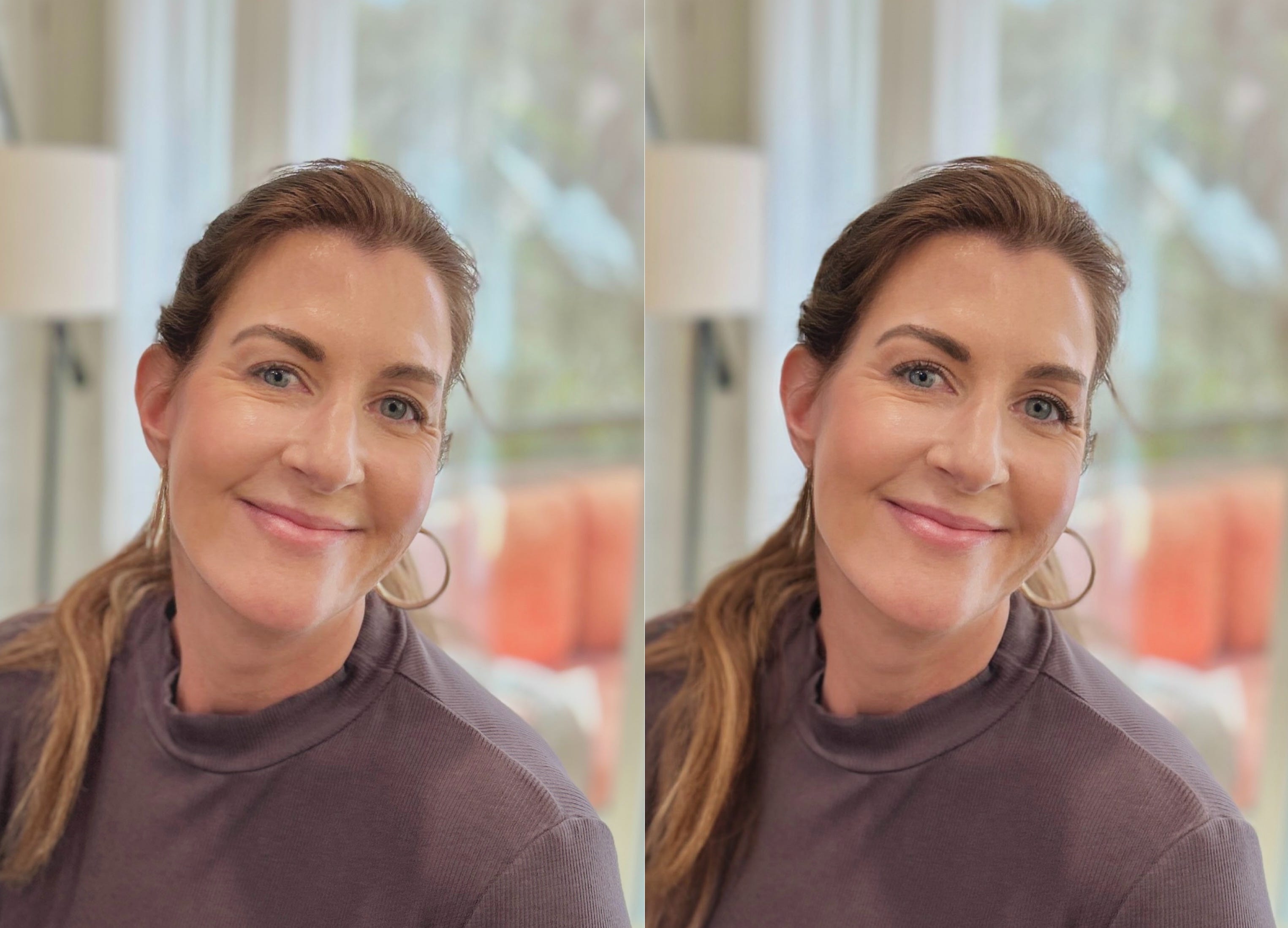
For reference, here’s a before (left) and after (right) image of me with 3 FaceApp settings: Smoothed skin, eyelashes (because I barely have any), and fuller hair.
That’s it. A 3-second edit in FaceApp created a more polished version, but didn’t change my face, neck wrinkles or crow’s feet around my eyes.
Always Sound Like Yourself
If you’re using a clone voice or an AI voice, that’s fine — but make it yours. The reader can hear the difference between a voice that sounds like you and one that sounds like a voice trying to sound like you.
Same rule applies if you’re recording yourself: don’t perform. The person listening knows the difference between your real voice inflections, phrasing and vernacular and a perfomative voice, and they trust the real one more.
Writing Style Matters
I was doing an audit for one of my clients and looked at the articles on her home page. The writing style, tone and cadence was different on some articles. When I asked her about it, she said she was trying to match the writing style of a creator she admired.
The problem was, the other creator was speaking to a much younger demographic and using rhythm, word choices, patterns, phrases, scenarios and patterns that were different noticeably different from how she usually speaks and writes.
Everything was designed to sound like someone else. But your reader knows how you typically write and talk. When your writing doesn’t match the way you speak, there’s a disconnect they feel and you risk becoming unrelatable.
Write like you talk, not like you think a writer should write.
A quick gut check, not a to-do list
Before you publish anything this week, ask yourself:
Would someone recognize me in under three seconds if we met on a video call right after they'd seen my profile photo?
Does my writing sound like the same person no matter which platform it's on, or do I shape-shift depending on the audience?
If I'm using an AI voice, a filter, or any tool, would I be comfortable telling my audience exactly what it is and why I used it?
Would the people who've known me the longest say I sound like myself right now?
If you hesitated on any of those, you don't have a scandal. You have information. What you do with it is up to you — but now you know it's there.
The whole trust test
Consistency isn't glamorous. There's no version of it you finish once and never think about again. It's just the same person, showing up the same way, on purpose, every time someone finds you.
That's the whole trust test. Your photos are a major part of the exam.
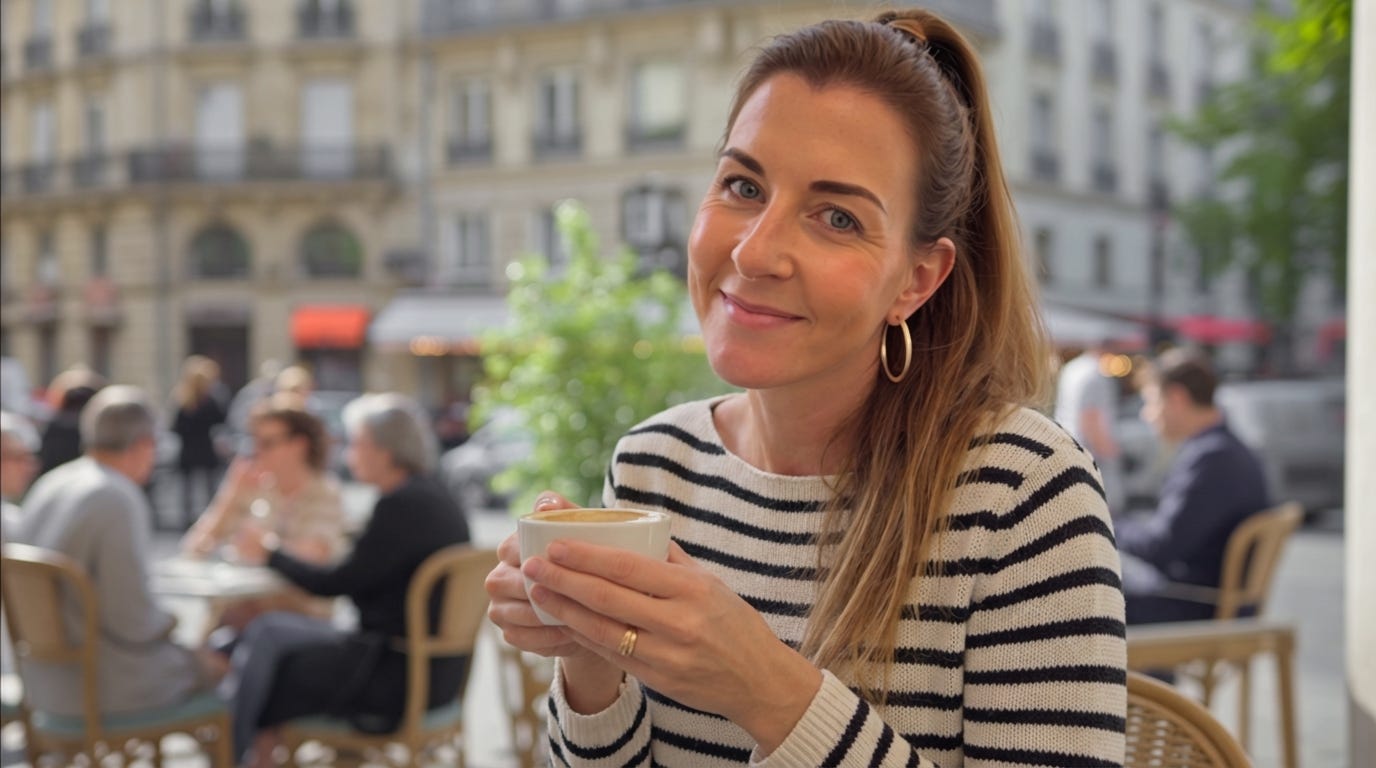
Carrie Loranger is a Substack coach and bestseller, and the founder of 9-To-Thrive.
There’s a faster way to do this
Everything in this post is one piece of a bigger system. Inside The Academy, I walk you through all of it in order, from your homepage to your first paid subscriber. Paid members also get my bestselling digital products free, a free month of WriteStack and every monthly challenge.
Want me in your corner? VIP adds a 60-minute 1:1 strategy call with me, Academy LIVE group coaching and the AI, Agents & Vibe Coding Accelerator.
Other ways I can help you:
→ The Academy: all my courses in one place, with my bestselling digital products and every monthly challenge included.
→ The Substack Setup Sprint: four 1:1 sessions to set up your Substack the right way, with support between sessions.
→ 1:1 Substack Coaching: eight weeks of private 1:1 coaching to build your newsletter business.
→ Substack Newsletter Audit: a recorded video review of your Substack with specific fixes you can make right away.
→ Clarity Call: one 60-minute call to untangle your strategy and leave with a clear direction.

agree 100%. from one brand strategist to another, I like that you’re helping people remember that
I agree with your points but then why do we feel the need to use apps to touch up images of us at all? (I have done this too, my profile is me, the background is not). If we are serious about authenticity, maybe some bad lighting and less than perfect backgrounds are ok? Challenging myself on this as it’s clear that the slicker the branding and imagery, the faster newsletters seem to grow. So how do we hold both to authenticity, and growth in our hyper-touchedup world? 🤔