

Monetize Without a Massive Audience
A creator with 847 subscribers made $14,000 last month.
A creator with 52,000 subscribers made $340.
Read that again.
The first creator sells coaching and digital products. The second creator is still “building audience” and waiting for sponsorships that pay pennies.
This isn’t an exception. It’s the rule. And it exposes the most expensive lie in the newsletter world: that you need a big audience to make real money.
I believed that lie for too long. I watched my subscriber count climb while my revenue remained flat because I was optimizing for the wrong metric.
The day I stopped chasing subscribers and started building multiple income streams from the audience I already had, I made more in one month than the previous six combined.
Here’s what nobody tells you: your small list might be your biggest advantage. And every month you wait to monetize is money you’re lighting on fire.
In this guide, I’m breaking down why conventional monetization advice is designed for a business model that isn’t yours—and what actually works when you don’t have tens of thousands of subscribers. Here’s what we’ll cover:
Why the “wait until 2,000 subscribers” advice is wrong for most creators
The one metric that matters more than list size
How small audiences actually have a conversion advantage
Which monetization strategies work without scale
The mistakes that keep small-list creators broke
Let’s get into it.

Why does conventional newsletter monetization advice fail creators with small audiences?
Most newsletter advice comes from media companies optimizing for massive scale—publications with hundreds of thousands of subscribers selling ads and sponsorships. Their playbook doesn’t translate to coaches, consultants, or experts building small-scale businesses around their knowledge. When you follow advice designed for media companies, you end up chasing metrics that don’t matter for your business model while ignoring the ones that do.
The “wait until 2,000” myth
Open any guide on newsletter monetization and you’ll find some version of this advice: “Wait until you have at least 2,000 subscribers before monetizing.”
This makes sense if you’re planning to sell sponsorships. Advertisers want eyeballs, and 500 subscribers isn’t enough to interest most brands.
But here’s what that advice misses: sponsorships aren’t the only way to monetize. They’re not even the best way for most creators.
If you have expertise worth paying for, such as coaching, consulting, courses, or digital products, you can monetize with 100 subscribers. I’ve watched creators close $5,000 consulting deals from lists smaller than that. The advice to wait assumes you’re building a media business. Most of us aren’t.
Why media-model advice doesn’t apply to experts
Media newsletters make money by aggregating attention and selling access to it. The bigger the audience, the more valuable the ad space. Revenue scales linearly with subscriber count.
Expert newsletters work differently. You’re not selling attention—you’re selling transformation. A coach doesn’t need 50,000 people who might be interested. They need 10 people who are ready to invest in change.
When you follow media-model advice as an expert, you optimize for the wrong things. You chase subscribers instead of building offers. You give away your best thinking for free instead of packaging it into products. You wait for permission from some arbitrary number instead of serving the people already on your list.
The real reason most creators don’t make money
The “wait to monetize” advice feels safe. It gives you permission to avoid the uncomfortable work of selling.
But waiting has a cost. Every month you delay monetization is a month of revenue you’ll never recoup. It’s also a month of training your audience to expect everything for free, which makes the eventual transition to paid even harder.
The creators who build sustainable businesses don’t wait for perfect conditions. They start monetizing early, learn from what works, and iterate. The best time to make your first sale was six months ago. The second-best time is this week.
What is revenue per subscriber and why does it matter more than list size?
Revenue per subscriber (RPS) measures how much money you generate per person on your list over a given period. A creator earning $10,000 per month from 500 subscribers has an RPS of $20. A creator earning the same $10,000 from 50,000 subscribers has an RPS of $0.20. Same revenue, wildly different business health—and the smaller list is actually in a stronger position.
The formula: Revenue = Subscribers × Conversion × Price
This simple equation explains why subscriber count is overrated:
Revenue = Subscribers × Conversion Rate × Average Price
You can increase revenue three ways:
Get more subscribers (hard, slow, expensive)
Improve conversion rates (very controllable)
Raise your prices (immediately controllable)
It’s natural to want option one and ignore options two and three, but conversion and pricing are where the real leverage lives, and small lists often convert better than large ones.
Why 500 engaged subscribers can earn more than 50,000 passive ones
A small, engaged audience outperforms a large, passive one for a simple reason: the people on a small list are usually there intentionally.
They found you through a specific piece of content. They signed up because something you wrote touched on a specific problem they have and they open your emails because they care about what you’re saying.
Large lists often include a large percentage od people who signed up for a freebie and forgot about you, subscribers acquired through paid ads who never engaged, and people who joined years ago and no longer fit your audience.
Engagement directly predicts buying behavior. Someone who reads every email is far more likely to purchase than someone who hasn’t opened one in six months.
How to calculate your RPS
Here’s the simple version:
RPS = Total Revenue ÷ Total Subscribers
If you made $3,000 last month and have 600 subscribers, your RPS is $5.
Track this monthly. A rising RPS means your monetization is working. A flat or falling RPS—even with subscriber growth—signals a problem.
For context, media newsletters typically see RPS of $0.10- $1.00 per month. Expert newsletters with products and services often command $5- $20 or more. The portfolio business model I teach regularly produces RPS above $10.
Can I really make money with fewer than 1,000 subscribers?
Yes, and not just pocket change. Creators with small lists can generate four and five-figure monthly earnings when they focus on the right metrics and offers. The “you need thousands of subscribers” belief is based on advertising-dependent business models that don’t apply to expertise-based creators.
Examples of small-list revenue models
A business coach with 400 subscribers sells three $1,500 strategy intensives per month: $4,500.
A copywriter with 800 subscribers fills one $3,000 VIP day per month: $3,000.
A fitness expert with 600 subscribers sells a $197 program to 15 people per launch: $2,955.
These examples are the result of building expertise-based offers instead of chasing subscriber list growth.
When I started my newsletter, I didn’t wait for some magic subscriber threshold. I created offers for readers already engaged. Some of my highest-revenue months came before I hit 2,000 subscribers because I was focused on serving my audience deeply rather than growing it broadly.
The math behind a $10K launch from 500 subscribers
Let’s work backward from a $10,000 launch:
500 subscribers with a 50% open rate = 250 people see your offer
10% click-through to sales page = 25 people seriously considering
20% conversion from sales page = 5 buyers
$2,000 price point × 5 buyers = $10,000
That’s a $10K launch from 500 subscribers with realistic conversion rates. The math works because the price point is appropriate for expertise-based offers—not because you need massive volume.
If you’re building an email list, offers or a 9-5 escape plan, this math should change how you think about “how big” your list needs to be.
Why engagement matters more than list size
Sponsors pay for reach. But when you’re selling your own offers, you’re not paying for reach because you already have direct access to your audience.
What you need is trust. And trust doesn’t scale linearly with list size. In fact, it often decreases as lists grow larger and less intimate.
A reader who’s been following you for six months and opens every email trusts you more than someone who signed up yesterday through a Twitter ad. Small lists are often composed primarily of these high-trust readers, which is why they convert better.
What is the intimacy economy and how does it benefit small newsletter creators?
The intimacy economy describes how online businesses succeed: the depth of the relationship now matters more than the breadth of reach. Creators with smaller, closer audiences increasingly outperform those with massive but distant followings. For newsletter creators, this means your “small” list might be your biggest competitive advantage.
Closer relationships = higher trust
When you have 500 subscribers, you can know them. You can respond to every reply. You can remember their situations, their challenges, and their wins.
This isn’t possible at 50,000. The relationship becomes one-to-many instead of one-to-one. The creator becomes a broadcaster instead of a conversation partner.
According to this Substack guide, direct reader relationships are one of the platform’s core advantages. Newsletters succeed because subscribers choose to hear from you, and that choice creates a foundation of trust that social media followers don’t have.

Higher trust = better conversions
Trust is the prerequisite for purchase. Before someone buys from you, they need to believe you understand their problem, that your solution works, and that you’ll deliver what you promise.
Building that trust takes time and interaction. Every email you send, every reply you answer, every piece of value you deliver deposits into the trust account.
Small-list creators often have higher trust balances per subscriber. They’ve had more touchpoints, more conversations, more opportunities to demonstrate competence. When they make an offer, the audience is primed to buy.
Why you can charge premium prices
Premium pricing requires premium trust. Nobody pays $2,000 for coaching from someone they just discovered.
But someone who’s been reading your newsletter for three months, who’s seen your thinking evolve, who’s gotten responses to their questions, is ready to invest at a level that reflects the relationship you’ve built.
Small lists support premium pricing because the depth of the relationship justifies it. You’re not competing on price with mass-market alternatives—you’re offering something those alternatives can’t: genuine connection and personalized attention.
What’s the difference between audience-dependent and expertise-dependent income?
Audience-dependent income requires scale, and you need thousands of subscribers before the numbers work. Expertise-dependent income converts your knowledge into revenue regardless of audience size. Understanding this distinction is key to monetizing a small newsletter, as it determines which strategies will work for you.
Audience-dependent: needs scale to work
Sponsorships, advertising, and platform payouts all depend on audience size. The more subscribers you have, the more you can charge (or earn).
At 1,000 subscribers with a 50% open rate, a $30 CPM sponsorship earns you $15 per email. Send weekly, and that’s $60/month. Not exactly life-changing.
Audience-dependent income has another problem: it’s vulnerable to platform changes. Sponsorship rates fluctuate. Ad networks change algorithms. Platform payout programs come and go.
Expertise-dependent: works from day one
Products, services, coaching, and courses monetize your expertise directly. The value is in the transformation you provide.
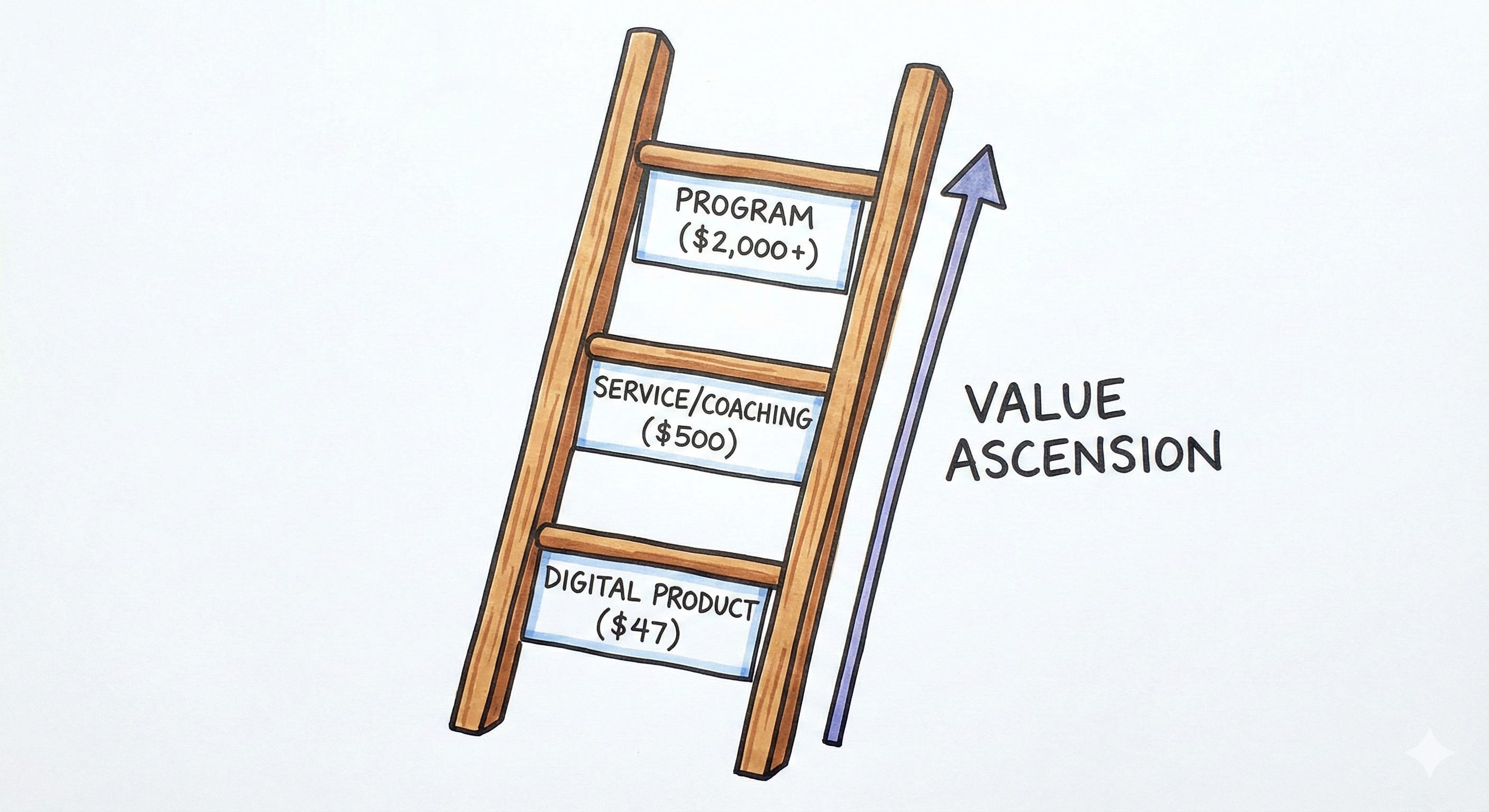
A $500 coaching session requires one client, not 10,000 subscribers. A $47 digital product converts at 2-3% of your list, meaning 15-20 sales from 600 subscribers.
Expertise-dependent income also compounds. The coaching client becomes a case study. The digital product buyer becomes a course customer. Each transaction builds toward the next.
Why expertise scales better
Audience-dependent income scales linearly: double your subscribers, double your ad revenue.
Expertise-dependent income scales geometrically. The course you create once sells indefinitely. The coaching methodology you develop attracts higher-paying clients over time. The reputation you build commands premium rates.
More importantly, expertise-dependent income is yours. It travels with you if platforms change. It doesn’t depend on advertiser budgets or algorithm shifts. It’s what I call “algorithm-proof” revenue, meaning income that survives whatever the platforms do next.
Which monetization strategies work best for small newsletter audiences?
Digital products, services, and paid communities convert best for small audiences because they monetize expertise rather than attention. Sponsorships and advertising should wait until your list grows significantly larger. The key is matching your monetization strategy to your current audience size rather than copying what works for larger creators.
Digital products (best for small lists)
Digital products—guides, templates, mini-courses, workshops—are ideal first offers for small lists.
Why they work:
Create once, sell repeatedly (no ongoing time investment)
Price points ($27-$197) are accessible impulse purchases
Demonstrate your expertise before asking for bigger commitments
Provide social proof and testimonials for future offers
A $47 template selling to 3% of a 500-person list generates $705. Create three products, and you have a $2,000+ monthly revenue stream without coaching calls or service delivery.
There’s a faster way to do this
Everything in this post is one piece of a bigger system. Inside The Academy, I walk you through all of it in order, from your homepage to your first paid subscriber. Paid members also get my bestselling digital products free, a free month of WriteStack and every monthly challenge.
Want me in your corner? VIP adds a 60-minute 1:1 strategy call with me, Academy LIVE group coaching and the AI, Agents & Vibe Coding Accelerator.
Services and coaching
If you have expertise people pay for, i.e., a coach or consultant, services are your fastest path to revenue from a small list.
Why they work:
High ticket = fewer sales needed
One-on-one delivery means you learn exactly what your audience needs
Creates case studies and testimonials for future products
Immediate revenue while you build other offers
The constraint is time. Services don’t scale infinitely. But for a creator just starting to monetize, filling 3-4 coaching slots per month from a 500-person list is very achievable—and generates $3,000-$6,000 immediately.
Paid subscriptions
Paid newsletter subscriptions can work for small lists, but conversions are typically 5-10% of engaged free subscribers.
From 500 subscribers, that’s 25-50 paying members. At $10/month, you’re earning $250-$500 in recurring revenue. Not bad as a supplemental income stream, but not enough to build a business on alone.
Paid subscriptions work best as part of a larger offer ecosystem, not as the primary revenue source for a small-list creator.
Why skip ads and sponsors in the early stages
With fewer than 5,000 highly engaged subscribers, sponsorships aren’t worth the effort.
You’ll spend hours pitching brands for $50-$100 placements. The income doesn’t move the needle, and focusing on sponsors distracts you from building the direct-to-audience offers that scale.
There’s nothing wrong with sponsorships as part of a mature monetization strategy. But for small lists, they’re a distraction from higher-leverage activities.
Not sure which offer to build first? Take my Build Your Offer Stack Quiz—it recommends the right starting point based on your expertise and audience.
How do coaches and consultants monetize newsletters differently than media creators?
Coaches and consultants use newsletters primarily as trust-building and lead-generation engines, not as products in themselves. While media creators monetize attention directly through ads and subscriptions, service providers use free content to demonstrate expertise and convert readers into high-ticket clients. This fundamental difference in business model changes everything about how you should approach monetization.
Newsletter as lead generation
For a media creator, the newsletter IS the product. Revenue comes from people paying to read it or brands paying to advertise in it.
For coaches and consultants, the newsletter is a marketing channel. It builds authority, demonstrates expertise, and keeps you top of mind with potential clients. The revenue comes from the services and products your newsletter promotes.
This perspective matters. You’re not trying to maximize newsletter revenue. You’re trying to maximize client acquisition and lifetime value. The newsletter is a means to that end, not the end itself.
If you want to go deeper on this, I cover the full strategy in Substack for Coaches: how to monetize more without working more.
The authority-building flywheel
Every newsletter you send reinforces your expertise. Readers see your thinking. They watch you solve problems similar to theirs. They absorb your methodology before they ever pay you.
This compounds over time. Six months of consistent newsletters creates more authority than any amount of advertising could buy. When a reader is finally ready to hire a coach, you’re already the obvious choice because they’ve been learning from you for months.
The flywheel also works in reverse. Client work gives you stories and case studies for your newsletter. Newsletter readers become clients. Clients refer readers. Each element strengthens the others.
High-ticket conversions from small audiences
Media creators need scale because their revenue per transaction is low. A $5 sponsorship fee requires thousands of impressions to matter.
Coaches and consultants work with the opposite math. A $3,000 coaching package requires ONE sale. A $1,000 strategy day requires one client per week to generate $4,000 in monthly revenue.
This is why the “you need a big audience” advice doesn’t apply. You don’t need thousands of people to find three coaching clients per month. You need a small group of the right people who trust you enough to invest.
Sponsorships vs products: Which should small creators focus on first?
Products should come first for almost every small-list creator. Sponsorships require audience scale you don’t have yet and create income that stays flat until you grow significantly larger. Products generate immediate revenue, build your offer ecosystem, and create assets that appreciate over time.
Why sponsorships need scale
Let’s do the math:
A 1,000-subscriber newsletter with 50% open rate (500 opens) can charge roughly $15-$25 per placement at standard CPM rates.
To earn $1,000/month from sponsorships alone, you’d need:
40+ sponsorships per month at $25 each, or
A much larger list (10,000+ subscribers)
Neither option is realistic for a small-list creator. Sponsorships simply don’t generate meaningful revenue until you have meaningful scale.
Why products convert immediately
Compare that to a single $97 digital product:
With 1,000 subscribers at 3% conversion, you sell 30 units, totaling $2,910.
One product, one launch, nearly triple the sponsorship income—and you still have the product to sell next month, and the month after.
Products also create customer relationships. A sponsorship buyer is someone else’s customer who happened to see your newsletter. A product buyer is YOUR customer. They’re in your ecosystem, primed for your next offer, building lifetime value.
The hybrid approach
Once your products are converting reliably, sponsorships can supplement your income. The product revenue covers your baseline. The sponsorships provide upside.
But starting with sponsorships puts the cart before the horse. Build your product ecosystem first. Add sponsorships later as a bonus, not a necessity.
What subscriber count do you need to start monetizing?
You can start monetizing from day one if you have expertise to sell. There’s no minimum subscriber threshold for launching products or services. The question isn’t “do I have enough subscribers?” but “do I have something valuable to offer?”
Day one vs . when you’re ready
The “build audience first, monetize later” advice sounds logical, but creates problems:
You train readers to expect free content indefinitely
You delay learning what your audience actually pays for
You miss revenue you could have earned while growing
You wait for permission that never comes
Starting earlier means you learn faster. Your first offer might flop. Your pricing might be off. Your positioning might need adjustment. All of that is valuable information you can only get by putting something into the market.
Signs you’re ready to monetize
You’re ready if you can answer “yes” to these questions:
Do people reply to your emails? Replies indicate engagement and connection. Silent lists don’t buy.
Have readers asked about working with you? Direct requests are the clearest buying signal. Don’t ignore them.
Can you articulate a specific outcome you help people achieve? If you know the transformation you provide, you can package it into an offer.
Do you have any expertise that people pay for elsewhere? If someone would pay for your knowledge in any context, they’ll pay through your newsletter too.
You need engagement, trust, and something valuable to sell.
The value first approach
None of this means you should sell aggressively to a cold list. Value should always come first.
Creators who successfully monetize small lists have usually delivered substantial free value before asking for payment. Their paid offers feel like natural extensions of the help they’ve already provided, not interruptions.
As I’ve documented in my post 365 Newsletter Growth Lessons, the relationship comes first. But “value first” doesn’t mean “money never.” It means earn trust, then make offers.
How do you calculate what your subscribers are really worth?
Subscriber lifetime value (LTV) measures the total revenue a subscriber generates during their time on your list. This metric helps you understand the real economics of your newsletter and make smarter decisions about growth, monetization, and what you can afford to invest in audience building.
LTV formula simplified
Basic LTV calculation:
LTV = Average Revenue Per Subscriber × Average Subscriber Lifespan
If your monthly RPS is $5 and subscribers stay an average of 18 months: LTV = $5 × 18 = $90 per subscriber
This tells you that each new subscriber is worth roughly $90 to your business over time.
Why niche lists are worth more
According to this subscriber value research, LTV varies dramatically by niche:
General interest newsletters: $1-$10 LTV
B2B professional newsletters: $15-$50 LTV
High-value niches (finance, business coaching): $30-$100+ LTV
The more specific your niche and the more valuable the problems you solve, the higher your LTV. A newsletter for “everyone interested in productivity” has lower LTV than a newsletter for “operations managers scaling from 50 to 500 employees.”
This is another reason small, focused lists outperform large, generic ones. The specificity that limits your growth also concentrates value.
Tracking what matters
Most creators track vanity metrics: subscriber count, open rate, maybe click rate.
It’s fine to look at those, but I suggest adding these to your monthly tracking:
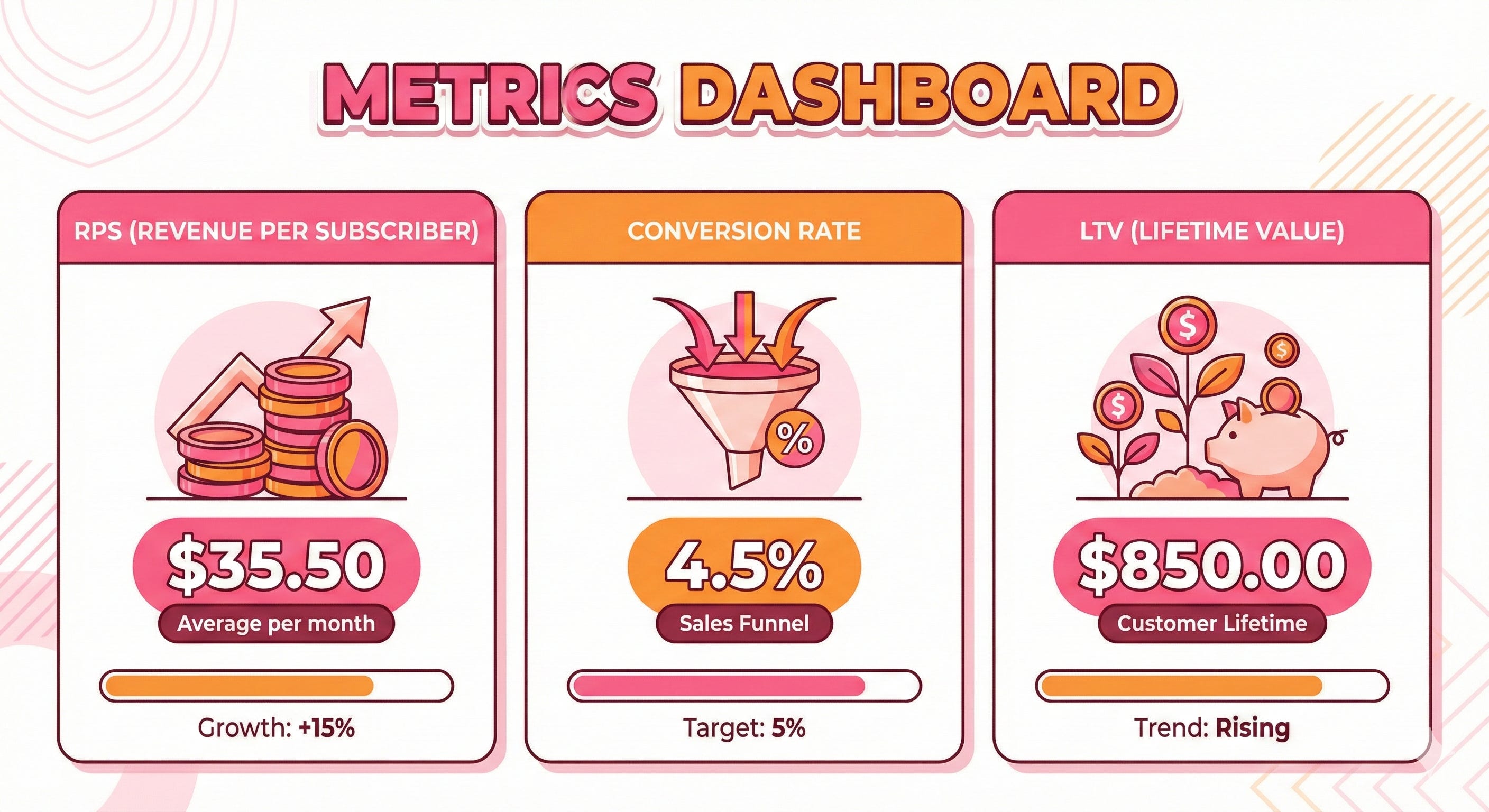
Revenue per subscriber (RPS): Total revenue ÷ total subscribers
Conversion rate: Buyers ÷ subscribers who saw offer
Customer lifetime value: Revenue per customer over time
These numbers tell you whether your monetization is working. Subscriber count alone doesn’t.
What are the biggest mistakes small newsletter creators make when monetizing?
The biggest mistakes are waiting too long to start, copying strategies that require scale, underpricing expertise, and focusing on subscriber growth instead of revenue growth. These mistakes keep creators stuck in “build mode” indefinitely while leaving significant income on the table.
Waiting too long
Every month you delay monetizing is a month of revenue gone forever.
“I’ll monetize when I hit 1,000 subscribers” becomes “I’ll monetize when I hit 2,000” becomes “I’ll monetize next quarter.” Meanwhile, your audience gets conditioned to expect everything free, and you lose momentum on offer development.
Start now. Learn from the market. Iterate.
Copying media newsletter models
Morning Brew and The Hustle monetize through massive scale, advertising, and eventually acquisition. Their strategies require millions of subscribers and venture backing.
You probably don’t have either. Copying their approach—daily free content, sponsorship focus, subscriber-count obsession—leads to burnout without the payoff.
Build for YOUR economics: expertise-based offers, direct audience relationships, premium pricing. The solopreneur playbook isn’t the media company playbook.
Chasing subscribers instead of revenue
I’ve watched creators spend thousands on paid growth while having zero offers in place. They’ll have 10,000 subscribers and $0 in revenue because they’ve optimized for the wrong metric.
Subscribers are a means to an end. Revenue is the end. Grow your subscriber base while building monetization—not instead of it.
Underpricing expertise
First-time offer creators consistently price too low. They’re afraid no one will buy, so they charge $17 for something worth $97.
Low prices don’t just leave money on the table. They signal low value. A $500 coaching package positions you as a professional. A $50 coaching package positions you as desperate.
If you’re nervous about pricing, start with a limited beta at a lower price. But have a plan to raise prices as you gather testimonials and confidence.
How do I start monetizing my small newsletter this week?
Start by identifying what you already have that people would pay for. Package one piece of your expertise into a simple offer—a template, a short guide, a coaching call. Announce it to your list. Learn from the response. This week’s goal isn’t perfection. It’s your first transaction.
The simplest first step
This week: Create ONE simple offer based on the recommendation. A template. A 30-minute coaching call. A short guide solving a specific problem.
Next week: Announce it to your list. Not with a massive launch—just a simple email explaining what you’ve created and who it’s for.
That’s it. One offer, one announcement, one opportunity to learn what your audience actually pays for.
Resources to go deeper
If you want to accelerate:
For personalized guidance: Book a 60-minute clarity call and we’ll map your specific path.
What comes after your first sale
Your first sale teaches you something no amount of planning can: what people really pay for vs. what you think they pay for.
Maybe your $47 template sells better than expected. Create a related product.
Maybe your coaching calls fill instantly. Raise your prices.
Maybe your course doesn’t convert. Survey buyers and non-buyers to understand why.
Each transaction is data. Use it to build the next offer, refine your positioning, and grow revenue per subscriber over time.
That’s how you turn a small list into big revenue—one intentional offer at a time.
Key Takeaways
Revenue per subscriber matters more than subscriber count—focus on conversion and pricing, not just growth
The “wait until 2,000 subscribers” advice is wrong for expertise-based creators who can monetize from day one
Small audiences have an intimacy advantage: closer relationships create higher trust and better conversions
Expertise-dependent income (products, services) works immediately; audience-dependent income (ads, sponsors) needs scale
Digital products and services are the best first monetization strategies for small lists
Take the Offer Building Quiz to find your starting point
Over to you
What’s the smallest list you’ve seen generate real revenue? Or if you’re still building: what’s stopping you from monetizing now?
Drop a comment—I read and respond to every one.
♻️ If this changed how you think about list size, hit “Restack” so other small-list creators can stop waiting to make money from their newsletter. ♻️
One membership. Everything you need to build your business on Substack
Other ways I can help you:
→ The Academy: all my courses in one place, with my bestselling digital products and every monthly challenge included.
→ The Substack Setup Sprint: four 1:1 sessions to set up your Substack the right way, with support between sessions.
→ The 9-To-Thrive Accelerator: eight weeks of private 1:1 coaching to build your newsletter business.
→ Substack Newsletter Audit: a recorded video review of your Substack with specific fixes you can make right away.
→ Clarity Call: one 60-minute call to untangle your strategy and leave with a clear direction.
Carrie -
THANK YOU for writing these! I'm a new Substacker with a very niche audience. I'm writing safety toolbox talks for laboratory managers and EHS professionals. I have to write these for my day job anyway and they go over well with my lab staff, so might as well publish and see what comes of it? If I can get 200 people to give me $5 a month, I will be THRILLED. LOL. Big dreams, yeah? Anyway, not a lot of people like me on this platform from what I can tell but this looks like maybe the #1 most applicable article of yours to me. I think - haven't read them all yet. I imagine I will continue to come back to this well over and over. Wish me luck!
Could you share about the conversion considerations for a coaching biz that isn't teaching business or Substack growth, or directly tied to income ROI? I'm a capacity coach for working mums so my transformation is mostly internal & identity based...I can't really offer things like VIP days or audits, I've been told by many clients they don't want a $47 pdf/masterclass type offer that feels like more work. I have a 1 off call, group program + private 6 month retainer package