
Short answer: Substack recommendations are the publications you suggest to your new subscribers at signup, and the ones other writers suggest to theirs. When a writer recommends you, every new subscriber they get is offered your publication, so the fastest way to grow with recommendations is to ask writers whose readers overlap with yours for a swap: recommend them, send one direct message, and offer to feature their blurb. 278 publications recommend mine, and they have sent 1,637 subscribers. The Swap Method below is how I asked.
This post is part of my guide to 365 newsletter growth lessons.
Last updated November 2026.
This post is part of my guide to Substack Notes. If you’re new here, start with Substack Notes Strategy 2026.
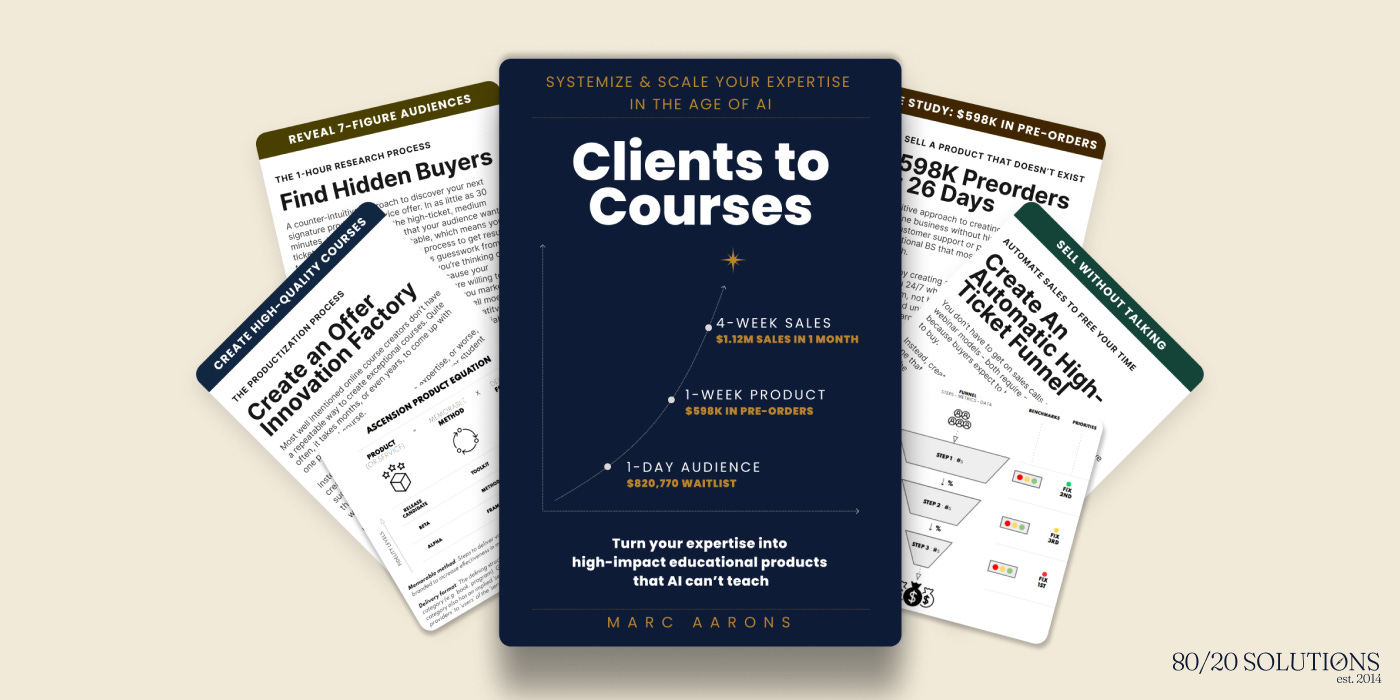
Clients to Courses
This is the book behind $0 to $4M in 10 months.
Going from the product idea to launch took 10 weeks. Result: $598K in sales.
(It took 10 weeks because we paused for a 2-week family vacation.)
Then, we paused selling it. Instead, we spent ~2 months to focus on delivering a quality experience and transformational outcomes for our 1st wave of students.
Once we had evidence of repeatable student success, then we started selling again.
That’s when we ramped up to $4M in 10 months.
This book contains everything we did to make it happen.
Learn about the Clients to Courses method →
*Sponsored Ad
278 publications recommend 9-To-Thrive, resulting in 1,637 new subscribers.
Every one of them shows my newsletter to their new subscribers at the moment those readers are already saying yes to a newsletter. I don't pay for any of it, and it works while I'm asleep, on vacation or writing something else.
If your recommendations page is empty, or full of friends whose readers would never want your newsletter, you're missing the lowest-effort way to grow on Substack.
How do Substack recommendations work?
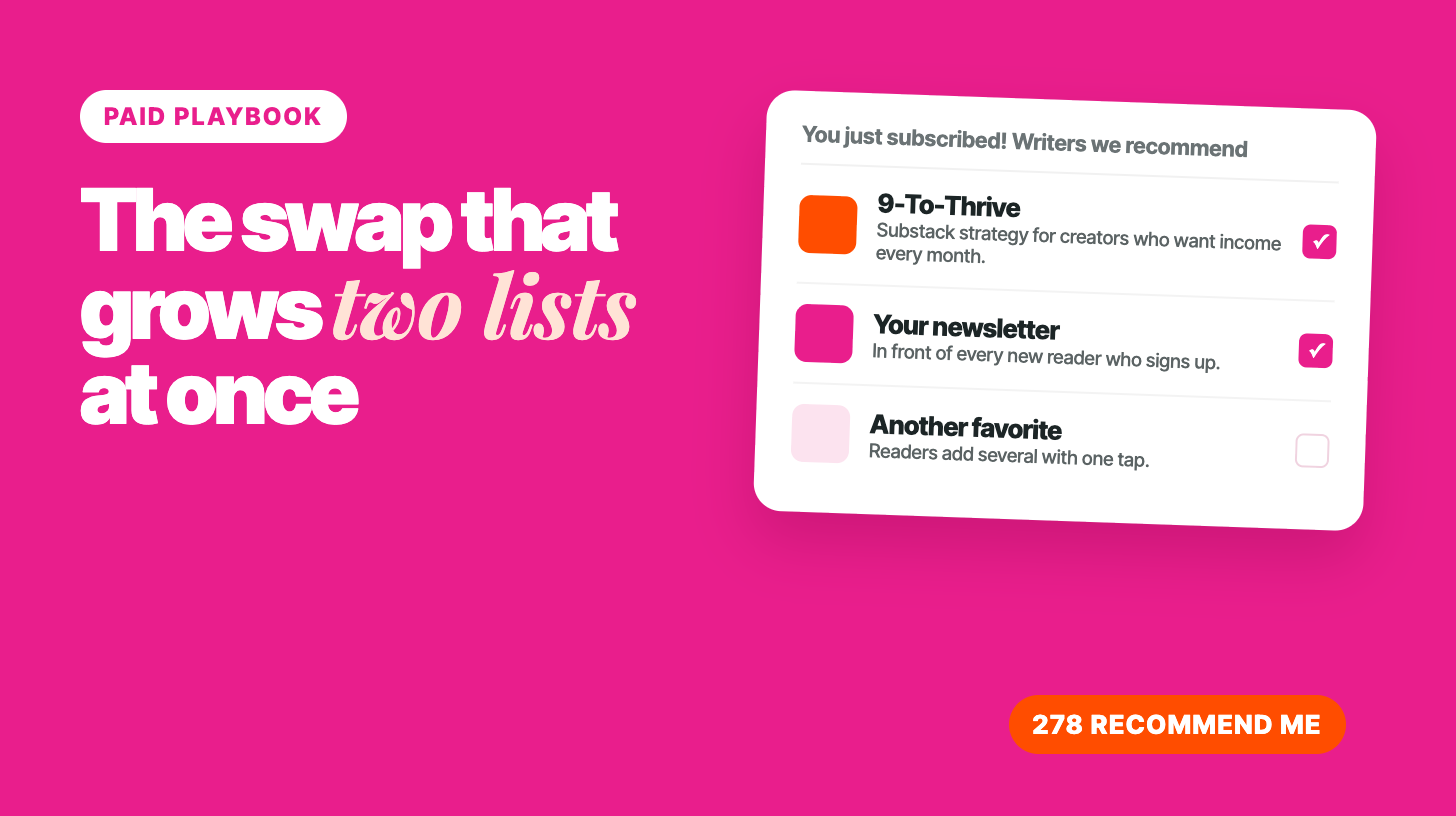
When someone subscribes to a publication, Substack shows them the newsletters that writer recommends and lets them add up to 3 with a tap. Writers who recommend you can also leave a “blurb” saying why, and you can feature up to three on your welcome page, where they read like reviews from people your future readers already trust.
How do you get recommended by others on Substack?
There are a many ways to get recommended by others, including is organically, where people simply enjoy your publication so much that they recommend you, and by asking someone to recommend your publicatoin.
Why most recommendation requests get ignored
I’ve seen people on Substack attempting to get and give as many recommendations as possible. That can backfire pretty quickly, especially if there’s an audience mismatch, because you’ll be getting subscribers who are not interested in what you write about. The result is a wave of unsubscribes.
A cold "hey, can you recommend my publication" asks a stranger to vouch for someone they've never read, so it usually gets deleted.
ecommending someone first and hoping they notice goes wrong too, because the person you recommended may see your publication as a fit for their audience.
Who should you recommend on Substack?
Writers in a neighboring niche whose readers have the problem you solve. If you teach freelancers to price their work, a newsletter about landing clients is a better match than a productivity newsletter.
Want more ways to get found?
Everything in this issue is taught step-by-step inside The Academy. It's everything I’ve ever taught all in one place, with new lessons added every month, and you'll learn to build with AI so the repetitive work runs without you.
Paid members get all of it, plus my bestselling digital products and every monthly challenge.
VIP members also get the AI, Agents & Vibe Coding Accelerator, a 60-minute 1:1 call with me and Academy LIVE group coaching.
What paid subscribers get in this issue
My five steps for getting recommendation that send subscribers to your publication: where to find writers with appropriate readers for your publication, how to tell which ones are worth recommending, the message to send, and how to get the best things people say about you onto your welcome page. Plus an AI prompt that does the heavy lifting for you.
The Swap Method
The Swap Method is how I get other writers to send me new subscribers every month. You find writers whose readers already overlap with yours, check that they’re a good fit, comment on their Notes until they know your name, and then ask for a recommendation swap directly.
Recommending someone blindly sends your readers away with nothing coming back. Recommending first and hoping they return the favor leaves the whole thing to luck.
With a strategic recommndation swap, you both agree up front, so both lists grow and every name on your recommendations page is one your readers will thank you for.
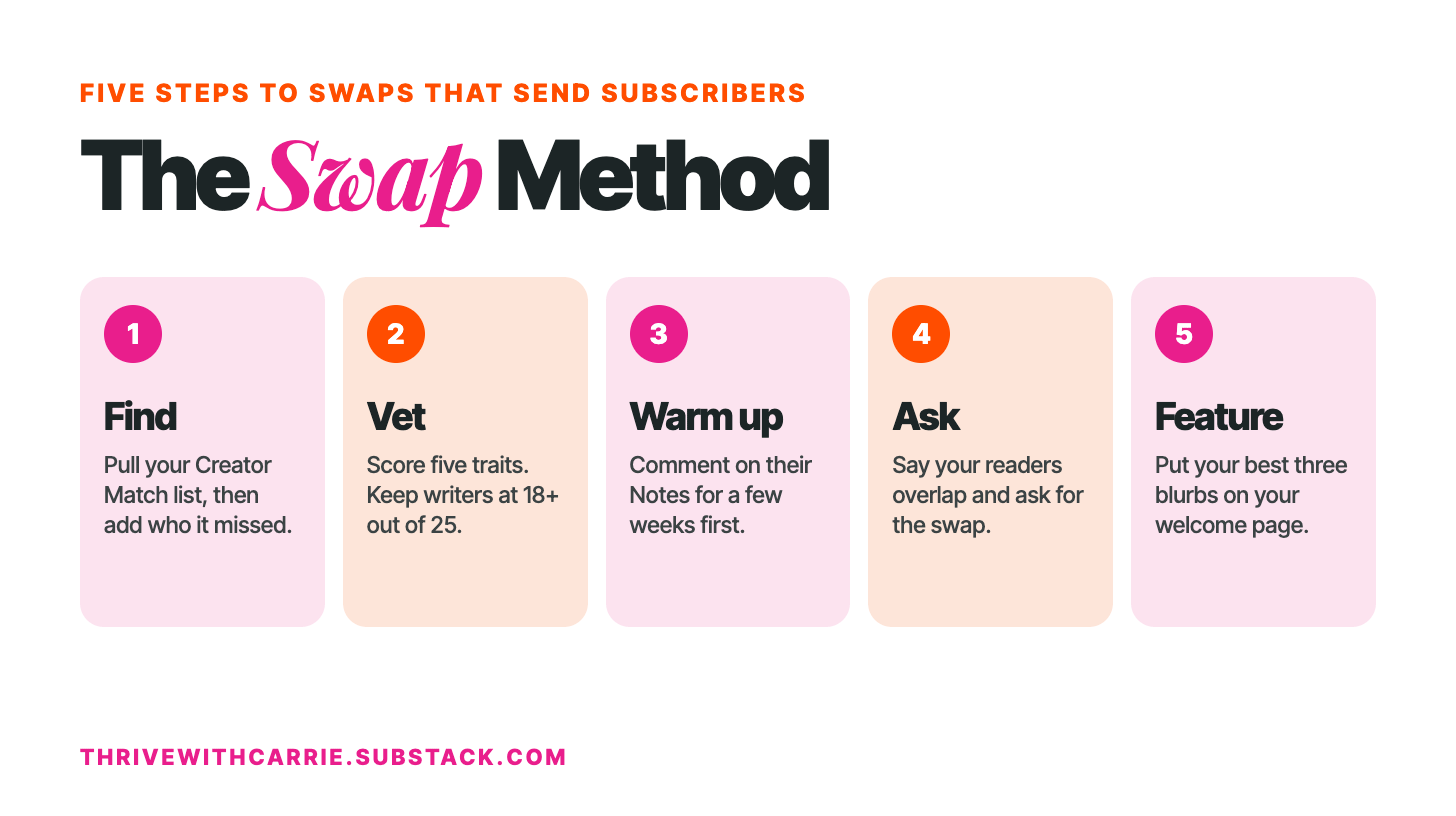
1. Pull your Creator Match list
Go to Audience > Creator match in your dashboard. Each match shows how well your audiences fit, how many subscribers you share, how many new readers each of you could reach, and a Message button. If you don't see it, reach out to Substack support.
It misses some good writers and suggests a few you'd never send your readers to, so check the bestseller and rising lists in your Explore categories and look for any other candidates. Leave out direct competitors, unless you see a benefit to collaborating with them.
2. Vet every name
Read their last five Notes and their latest post, then score them from 1 to 5 on each trait:
Consistent: they publish on a regular schedule.
Adjacent: strong work in a lane next to yours, without copying it.
Overlap: their readers would want your newsletter, and yours would want theirs.
Values: their tone and way of selling sit comfortably next to yours.
Engaged: they reply, comment and restack instead of posting links and disappearing.
Keep anyone at 18 or more out of 25, and favor writers at your stage over writers ten times your size.
3. Get on their radar first
Comment on their Notes for a few weeks before you ask, and say something specific each time. Don't recommend them yet. A recommendation nobody agreed to sends your readers away for nothing.
4. Ask for the swap
Send it through the Message button in Creator match, a DM or an email:
Hi [Name], I've been reading [Publication] since your post on [topic], and I think our readers overlap without us competing. Would you consider a recommendation swap? I'd love to send my readers your way because [one or two specific reasons you'd recommend them].
Adapt this message to fit your business and change the details for every writer. If they say yes, add them that day and use the reasons you gave them in your recommendation blurb. If they say no or don't answer, move to the next name.
5. Feature your best blurbs
Go to Audience > Recommendations, scroll down to Settings and click Manage next to Manage recommendation blurbs. Add up to three to your welcome page, picking the ones that say who your newsletter helps and what readers get.
Once a quarter, check the top of that page to see which recommendations send subscribers. Replace the ones that send none, and give a partner a heads-up before you drop them, if it makes sense to do so.
The mistake that makes your list useless
Recommending 60 publications, or friends whose readers don't fit. A long list buries every name on it, and your readers trusted you with their inbox, so only send them somewhere you'd send a paying client.
Your AI prompt: vet your list and draft your swap messages
Copy this into ChatGPT, Claude or any AI writing tool. Fill in the brackets first.
I write [newsletter name] and you can find it here - [newsletter url] It’s for [who your readers are]. Check my Creator Match list in Substack, review a few of their recent Note topics and their latest post titles for each.
Score each writer from 1 to 5 on the following: consistency, adjacent quality, audience overlap, similar values and engagement, and tell me which ones score 18 or more out of 25 and why.
For each writer who passes, draft a short recommendation swap message from me. tone is warm and friendly. Ask if they’d consider a recommendation swap, and give two specific reasons I’d recommend them to my readers. Keep it under 70 words and make it sound like one writer talking to another.
*Edit each message so it sounds like you, and send them only to writers you've been commenting with.
The full build is in The Academy
The Swap Method is one part of getting found off Notes. Grow Beyond Notes in The Academy covers recommendations, Chat, Lives and getting found in search, each with a video and a worksheet, so every channel sends you readers.
Your Action Steps
Pull 10 to 15 names from Creator match and score them today.
Comment on your top three writers' Notes this week.
Add your three best blurbs to your welcome page.
Find the overlap, ask plainly, and let other writers send you readers who are already in a subscribing mood.
Carrie
P.S. Every one of those 278 recommendations is a writer telling their readers my newsletter is worth their inbox. Start your list today, and your first one could land soon.
Carrie Loranger is a Substack coach and bestseller, and the founder of 9-To-Thrive.
Good Reads 📚


Published weekly for paid subscribers of 9-To-Thrive. Not a subscriber yet? Get the next one →
Disclaimer. My results aren’t typical. Yours may vary depending on many factors, including the effort you put in, your niche, your experience, the time you have, your market, your audience and many other variables. This newsletter teaches strategies and systems; it does not guarantee subscribers, income or any specific result. Some links in this post are affiliate links, and I may earn a small commission at no extra cost to you.
Wow, I really got so much value here. I’d been thinking the only way to get subscribers was through notes and articles, but this has enlightened me.
Thank you so much for this. It will really be helpful. 🔥🔥🙌
This is a really helpful article explaining how recommendations work! I haven’t added any recommendations yet because I want to genuinely know and appreciate a creator’s work before recommending them to my readers. I’m not interested in swapping recommendations just for growth. For me, a recommendation is a personal endorsement, and I want it to mean something 💜